
FAQ

In the FAQ section you will find answers to the most frequently asked questions about Eurovent® roof membranes, wind barrier membranes, vapour control membranes, sealing tapes, and roofing accessories. We explain how to select the appropriate roof membrane depending on the type of roof covering, roof structure, and ventilation system, as well as how to correctly apply insulation solutions in roofs, façades, and foundations. We also address topics related to certifications, UV resistance, airtightness, and energy-efficient construction, providing reliable and practical knowledge for roofers, contractors, designers, and individual investors.
ABOUT US
What does the Eurovent® brand do?
Eurovent® specializes in the design and supply of system solutions for insulation, ventilation and the protection of building structures. The product range includes roof membranes, façade wind barrier membranes and vapour control membranes, sealing tapes, roofing accessories, as well as solutions for foundations, façades and green roofs.
Eurovent® products are designed with a focus on durability, airtightness and the energy efficiency of buildings.
Who are Eurovent® products intended for?
Eurovent® solutions are designed for roofers, contractors and construction companies, as well as designers, architects and private investors.
The products are used in single-family housing, multi-family residential buildings, industrial construction, prefabricated structures, timber-frame and CLT buildings, as well as in energy-efficient and passive buildings.
What distinguishes Eurovent® products from other solutions available on the market?
Eurovent® products combine high technical performance, compliance with European standards and solutions tailored to the real needs of contractors.
Features such as high mechanical strength, UV stability, airtightness, vapour permeability and system compatibility make these products widely used in demanding construction conditions.
Who are we looking for to join Eurovent®?
We are looking for reliable, responsible and committed individuals who are willing to work as part of a team and perform their duties with diligence.
We value integrity, accuracy and a willingness to learn and grow, regardless of the position.
Good to Know
UV Resistance
Products
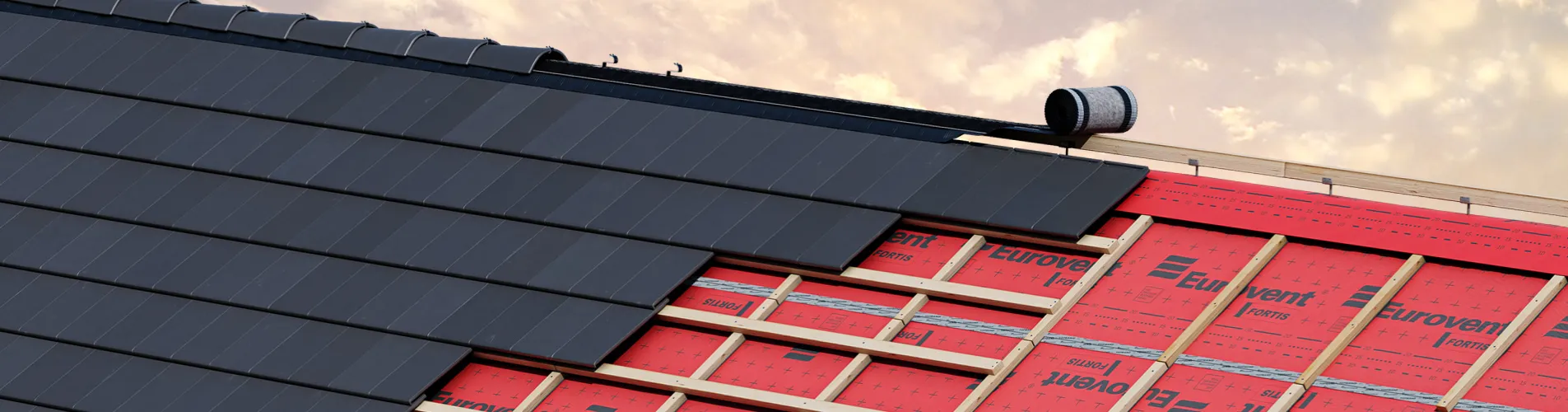
What is the difference between a high vapour-permeable roof membrane and roofing foil?
High vapour-permeable membranes allow free diffusion of water vapour from the thermal insulation layer and can be used in insulated roof constructions.
Low vapour-permeable roofing foils are mainly intended for non-insulated roofs and require effective ventilation of the space beneath the roof covering.
How to choose a roof membrane depending on the roof covering and roof structure?
The selection of a roof membrane depends on whether the roof is fully boarded or open rafter construction, as well as on the roof pitch and the type of roof covering.
For insulated roofs, high vapour-permeable membranes are recommended. In cases of low roof pitches or more demanding roof coverings, membranes with enhanced strength and higher watertightness should be used.
Why is the quality of a roof membrane crucial for roof durability?
A roof membrane protects the roof structure from moisture, wind and water vapour condensation. Its quality has a direct impact on the durability of the thermal insulation, the safety of the roof structure and the long-term performance of the roof system.
What function does the ridge perform in a roof structure?
The ridge is the highest point of the roof and plays a crucial role in roof ventilation. It is at the ridge that air exits the space beneath the roof covering, allowing moisture and heat to be removed from the roof structure.
Why is proper ridge ventilation so important for roof durability?
Proper ridge ventilation prevents water vapour condensation, moisture accumulation in the thermal insulation, and deterioration of wooden structural elements. Maintaining a continuous airflow through the roof structure significantly extends the service life of the entire roof system.
What is a vapour barrier and why is it essential in attic construction?
A vapour barrier is a layer that protects building structures from water vapour migrating from the interior of the building into the thermal insulation. Its purpose is to protect mineral wool insulation and timber structural elements from moisture, which could otherwise lead to loss of thermal performance, mould growth and material degradation.
Eurovent® vapour barrier foils and membranes, such as Eurovent® CLIMA X, create an airtight protective layer and support the proper performance of the entire roof–attic system.
What is the difference between a vapour control membrane and a vapour barrier membrane?
Vapour barrier membranes have a very high Sd value, which means they almost completely block the passage of water vapour. Vapour control membranes with variable diffusion resistance allow controlled vapour transfer depending on environmental conditions.
The choice depends on the type of construction, ventilation system and design recommendations. Eurovent® solutions include both types, making it possible to select the appropriate product for a specific building envelope structure.
An example of a vapour control membrane is Eurovent® CLIMA X20, while Eurovent® CLIMA 100 is an example of a vapour barrier membrane.
Why are sealing tapes so important when installing a vapour barrier?
Sealing tapes ensure the complete airtightness of the system by eliminating leaks around joints, profiles, roof windows, chimneys and service penetrations.
Eurovent® products such as Eurovent® UNISAN provide very high adhesion to a wide range of construction materials, helping to maintain the required level of airtightness, which is particularly important in energy-efficient and passive buildings.
When should membranes with variable diffusion resistance (smart vapour control membranes) be used?
Membranes with a variable Sd value, such as Eurovent® AKTIV, are recommended in constructions exposed to periodic fluctuations in humidity or in renovated structures where the risk of condensation is higher.
These products adapt to changing conditions — in winter they limit the passage of water vapour, while in summer they allow moisture to diffuse back towards the interior, helping the structure to dry.
They are particularly recommended for attic renovations and conversions into living spaces.
Does improper installation of a vapour barrier affect comfort and operating costs of a house?
Yes. An improperly installed or airtight vapour barrier can lead to moisture accumulation in the insulation, deterioration of the thermal performance of the structure, the development of mould, and increased heating costs.
A properly selected and correctly installed Eurovent® vapour barrier system improves the energy efficiency of the building and contributes to a longer service life of the entire structure.
Which sealing tapes should be used in ventilated façades?
In ventilated façade systems, it is recommended to use tapes with high resistance to weather conditions and UV radiation, such as butyl tapes, PE tapes or reinforced tapes designed for durable bonding of façade membranes.
These tapes stabilize the joints of wind barrier membranes and protect critical areas against rainwater penetration and wind-driven air infiltration.
A good example of such a solution is Eurovent® UNO COLD UV tape.
Which wind barrier membrane should be used in ventilated façades with open joints?
Ventilated façades with open joints require a wind barrier membrane with enhanced UV resistance, high vapour permeability, and long-term stability when partially exposed.
An excellent example of such a solution is Eurovent® FASSADE X – a two-layer monolithic façade membrane specifically designed for ventilated façade systems with visible gaps up to 30 mm, exposing no more than 30% of the membrane surface.
Which membrane should be used under metal façades, including standing seam metal cladding?
Metal façades — both ventilated and non-ventilated systems — require a specialized membrane that functions simultaneously as a wind barrier, separation layer and drainage layer.
For such applications, Eurovent® METALLIC is an ideal solution. It is a three-layer membrane with a polypropylene mesh structure that creates a spacer layer between the metal cladding and the substrate.
The mesh structure ensures continuous air circulation, enables efficient drainage of condensate, and protects the metal covering against corrosion caused by moisture accumulation.
Can one membrane be used for both roofs and façades?
Yes — provided that the membrane has appropriate technical parameters for both applications.
An example is Eurovent® HOME PRO, a three-layer, highly vapour-permeable wind barrier membrane designed for use in pitched roofs as well as façade systems.
What role do drainage and foundation membranes play in a building structure?
Drainage and foundation membranes create a protective barrier between the ground and the building structure. Their primary function is to drain excess water, protect the waterproofing layer from mechanical damage, and improve the working conditions of foundation walls.
Additionally, they can contribute to thermal and acoustic insulation and help regulate moisture levels around the foundations, supporting the long-term durability of the building structure.
Where are drainage and separation systems used besides foundations?
Drainage and separation systems are used not only in foundation structures, but also in floor slabs, retaining walls, terraces, green roofs, pedestrian walkways, sports fields and infiltration systems.
Their main functions include soil stabilization, filtration, drainage and protection of structural layers, helping to ensure the long-term durability and proper performance of building and landscape structures.
Which drainage membrane should be used for foundations and deep construction?
For foundations, basement walls and deep construction projects, it is recommended to use durable HDPE drainage membranes with high compressive strength.
An example of such a solution is Eurovent® GEO 20 — an extruded foundation membrane with 20 mm stud height, designed to provide enhanced drainage capacity. It effectively channels groundwater away, protects the waterproofing layer from mechanical damage, and improves the thermal and acoustic insulation performance of the structure.
Which membrane works best for green roofs and gardens?
In green roof systems, proper water management is crucial — both for draining excess water and temporarily storing it for vegetation.
For this type of application, Eurovent® GEO 20 GARDEN is designed specifically for green roofs and garden structures. It is a perforated HDPE drainage and water-retention membrane that enables effective drainage while simultaneously storing water during dry periods.
This solution enhances the durability of green roof systems and improves growing conditions for plants by maintaining a more stable moisture balance.
What is the function of geotextile in drainage and ground systems?
Geotextile serves separation, filtration and soil stabilization functions. It prevents the mixing of different substrate layers, protects drainage systems from clogging, and increases the durability of surfaces and structural layers.
Eurovent® GEOTEX is used in vertical and infiltration drainage systems, as well as under pavements, bicycle paths, sports fields, and drainage pipe installations, helping to ensure the long-term stability and efficiency of ground and drainage structures.
Why is snow protection necessary?
Heavy snowfall combined with sudden thaws can cause large masses of snow to accumulate on the roof slope and slide down in a single block. This creates a real hazard for building occupants, passers-by, vehicles, vegetation, façade elements, and even the roof structure itself.
Current regulations require building owners and property managers to ensure safety by installing appropriate snow protection systems.
Snow protection components — such as snow guards and snow fences — are designed to break up the snow layer, prevent sudden sliding, and distribute the load more evenly across the roof surface.
For the system to function properly, it must be selected according to local snow load conditions.
What characteristics should an effective chimney flashing tape have?
A chimney flashing tape should be flexible, easy to shape and resistant to UV radiation and weather conditions. It is also essential that it provides a durable bond with the substrate and roof covering, ensuring long-term watertight sealing of critical roof junctions.
In which areas of a building are construction sealing tapes and membranes used?
Construction tapes and sealing products are used in all key areas of a building where airtightness and moisture protection are required.
- Roofs and attics – for sealing overlaps of roof membranes, wind barrier membranes and vapour control layers, as well as sealing service penetrations.
- Façade systems – for airtight connections of wind barrier membranes and sealing details around windows and doors.
- Window and door installations – to ensure a durable and airtight connection between frames and the wall structure.
- Foundations and service penetrations – to protect the structure against moisture ingress and uncontrolled air leakage.
Properly selected sealing tapes are a key component of modern airtight building envelopes, improving energy efficiency, durability and indoor comfort.
What are roof ventilation vents used for?
Roof ventilation vents are responsible for efficiently removing moisture, stale air and gases from ventilation systems above the roof surface.
They ensure proper airflow (draft), stable operation of the ventilation system, and protection of the roof structure against water vapour condensation.
What is the difference between a roof ventilation vent and a roof slope vent?
A roof ventilation vent is used as an air outlet for ventilation or sewage systems, allowing air and gases to be discharged above the roof surface.
A roof slope vent, on the other hand, is mainly used to ventilate the space beneath the roof covering.
Both solutions complement the overall roof ventilation system, ensuring proper airflow and moisture control within the roof structure.
Why do the diameter and cross-section of a roof vent matter?
A properly selected ventilation cross-section ensures adequate airflow and reduces the risk of water vapour condensation within the system.
A larger connection diameter allows the ventilation system to operate more stably and efficiently, often eliminating the need for additional insulation of the duct.
Can roof ventilation vents work with both natural and mechanical ventilation systems?
Yes. Modern roof ventilation vents are designed to work with both natural (gravity) ventilation and mechanical ventilation systems, in accordance with current building standards and regulations.
What is a roof access system used for?
A roof access system allows safe movement across a pitched roof during maintenance work, chimney inspections, or servicing antennas and technical installations.
It provides stable footing and significantly reduces the risk of slipping or falling while working on the roof.
Is a roof access system required by regulations?
Yes. Roof access components should comply with the requirements of EN 516, which defines the rules for safe access to equipment located on the roof.
This is particularly important for chimneys and technical installations that require periodic inspections and maintenance.
What are roof snow protection systems used for?
Roof snow protection systems prevent sudden sliding of snow masses from the roof slope.
They protect people, vehicles, and building elements such as gutters, eaves and façades, thereby increasing the overall safety of the building and its surroundings.
Are snow protection systems required by regulations?
In many cases, yes. The use of snow protection systems results from local climatic conditions and design requirements related to snow loads, as defined in the PN-EN 1991-1-3 standard.
What is the function of a wind barrier membrane in external walls?
A wind barrier membrane protects the insulation layer from uncontrolled air movement, rainwater and moisture, while at the same time allowing water vapour to diffuse outward.
As a result, it improves the thermal efficiency of the building and protects the wall structure from moisture accumulation.
What is the difference between closed ventilated façades and façades with open joints?
In closed ventilated façade systems, the cladding fully covers the wind barrier membrane, protecting it from UV radiation and direct weather exposure.
In façades with open joints, the membrane remains partially exposed through the gaps between cladding elements. Therefore, such systems require membranes with enhanced UV resistance and a high fire reaction class to ensure durability and safety.
Why is selecting the right wind barrier membrane crucial for façade durability?
An improperly selected membrane may degrade under UV radiation or fail to provide the required level of airtightness.
Choosing the right product ensures stable performance parameters, long-term façade durability, and proper operating conditions for the insulation layer.


Proven Quality
Approvals and Certificates
Technology
Microporous Functional Film
The core of modern roof membranes is the microporous functional film. It is an extremely thin layer made from a stretched mixture of polymer and calcium carbonate (CaCO₃). During the extrusion process, more than one billion micropores per cm² are formed within the structure.
These micropores allow the membrane to achieve high watertightness while maintaining excellent vapour permeability, based on capillary action. As a result, water vapour molecules can pass through the micropores of the functional film and be transported to the outside of the structure.
Vapour Permeability – WDD
Vapour permeability is the ability of a building envelope component to allow water vapour to pass through it from the interior of the building to the outside.
This parameter is expressed in [g/m²/24h] and indicates the number of grams of water vapour that can pass through 1 m² of a material (such as a roof membrane or roofing underlay) within 24 hours.
A sufficiently high vapour permeability prevents excessive moisture accumulation within the roof structure, protecting it from progressive deterioration that could reduce its performance parameters and potentially lead to structural damage.
Temperature Resistance
Temperature resistance refers to a material’s ability to withstand extreme temperature conditions. In roof structures, materials are exposed to high temperatures in summer and sub-zero temperatures in winter.
It is generally assumed that the temperature beneath the surface of a ventilated pitched roof does not exceed 80°C. For this reason, the DIN standard specifies testing the temperature resistance of roof membranes within the range of −40°C to +80°C.
UV Resistance
UV resistance refers to a material’s ability to withstand the effects of ultraviolet (UV) radiation. This factor is one of the key determinants of a roof membrane’s service life, because the polymers used in membrane production are naturally sensitive to UV exposure.
Additives that enhance UV resistance help reduce the negative impact of solar radiation. However, prolonged exposure without the final roof covering, meaning continuous exposure to sunlight, can significantly weaken the material and reduce the product’s lifespan.
If stabilizing additives are not used, the membrane may undergo physical degradation and a faster decline in its technical performance parameters.
Ventilated Façades – Open Joint Systems
Ventilated façades with open joints are architectural solutions in which the façade cladding does not form a continuous, sealed surface. Instead, visible gaps or joints are intentionally left between façade boards or panels.
Such constructions are increasingly used in modern residential and commercial architecture, particularly in projects that emphasize a minimalist and natural aesthetic.
Typical characteristics of open-joint façades include:
- long-term exposure to UV radiation,
- direct contact with rain and weather conditions,
- intensive wind exposure,
- variable temperature and humidity conditions.
Learn more about ventilated facades - open joint systems
Linerless Sealing Tapes
To speed up sealing work and reduce downtime on site, it is worth using linerless adhesive tapes. This technology eliminates the need to remove a protective release liner, which significantly reduces installation time and makes application easier when working with gloves or in hard-to-reach areas.
The absence of a liner also means no installation waste, greater workplace safety, and better jobsite organization. Linerless tapes allow precise application in a single motion, improving the quality and consistency of bonded joints.
An example of this solution is Eurovent® FAST, which combines linerless technology with high adhesive strength and polyester fibre reinforcement. It is ideal for sealing roof membranes, vapour control membranes and wind barrier membranes, ensuring durable and airtight connections while saving installation time.
Self-Adhesive Membranes
Self-adhesive membranes are used wherever the continuity and airtightness of the protective layer of a roof, wall, or floor structure are essential. Thanks to the adhesive layer applied across the entire surface of the membrane, it is possible to achieve a durable and airtight bond with the substrate without the need for additional adhesives, tapes, or extensive mechanical fastening.
Such solutions significantly reduce the risk of leaks, particularly in critical areas of the structure, such as layer joints, corners, or service penetrations. At the same time, the membrane maintains its ability to allow water vapour to diffuse outward, protecting the insulation and structural elements from moisture accumulation.
An example of this solution is Eurovent® SUPER SA — a self-adhesive roof membrane that enables fast installation, strong adhesion to the substrate, and high resistance to wind and driving rain. It can be installed both vertically and horizontally, making it suitable for various construction systems and stages of building installation.
Join the newsletter
Contact
CONTACT


Search
Favourites
No favourites